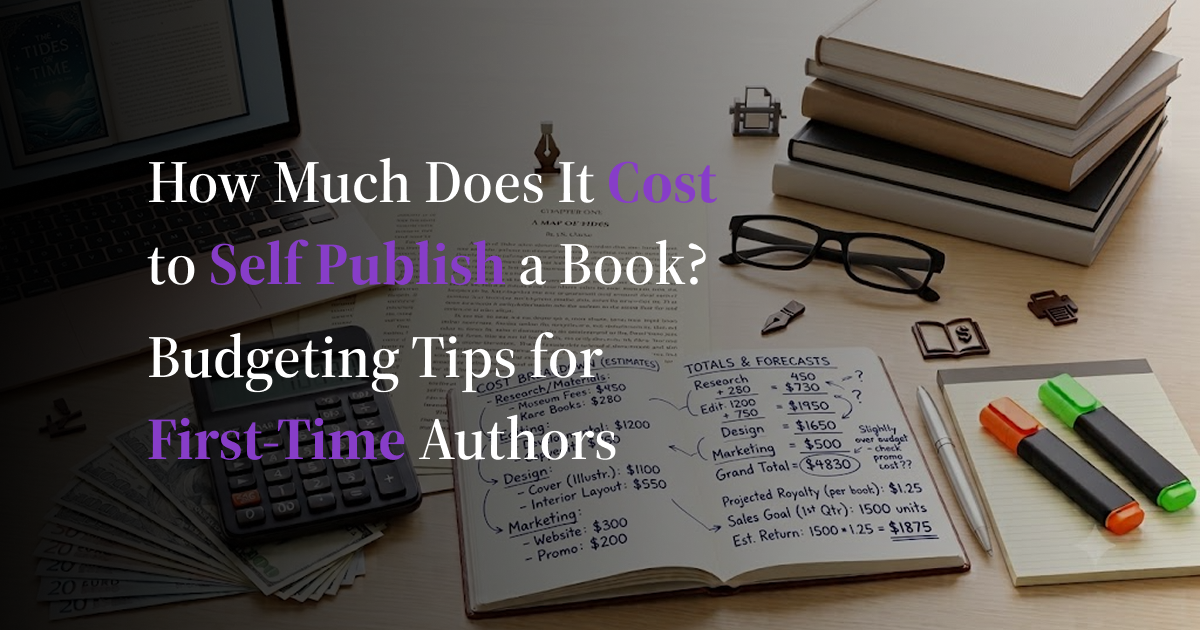

Congratulations! You just finished your manuscript, now what? Writing a book is a massive achievement and if you’re going indie, the next big question then is: How much is this going to cost me?
The short answer? It can cost anywhere from $0 to $5,000+ (or your local equivalent).
Let’s break it down realtime. Honest costs of self-publishing a book in 2026, alongside practical budgeting tips can range as written further down this text.
The Core Expenses: Where Your Money Actually Goes
Self-publishing is treating your book like a business. While you can do everything yourself for free, skipping professional help on core elements like editing can hurt your book’s sales. Understanding the hidden costs of skipping editing can help authors make better publishing decisions.
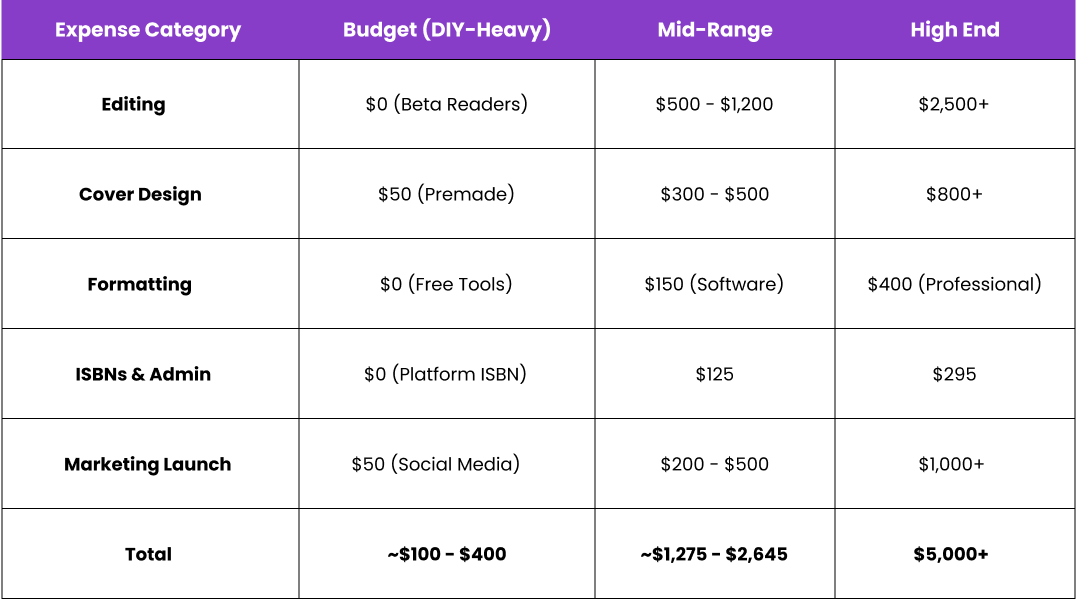
Here is a breakdown of the essential costs.
1. Editing (The Non-Negotiable)
This is usually your largest expense, but it’s also the most critical. Readers will forgive a minor formatting quirk, but a plot hole or constant typos are a no no.
- Developmental Editing: Focuses on story structure, pacing, and character arcs.
- Copyediting/Proofreading: Focuses on grammar, typos, and flow.
- Estimated Cost: $300 – $2,500+ (depending on book length and editing needs).
2. Cover Design
People absolutely judge books by their covers. A professionally designed cover helps your book stand out, reflects your genre, and encourages readers to click “Buy.”
- Premade Covers: $50–$200 (great budget option).
- Custom Covers: $300–$800+.
3. Formatting/typesetting
Your book needs to look good on a Kindle, an iPad, and in print.
- DIY Option: Tools like Atticus or Vellum cost around $150–$250 for a lifetime license and let you format unlimited books.
- Hiring a Professional: starts from $50 here
4. ISBNs and Distribution
An ISBN (International Standard Book Number) is your book’s unique identity code.
- In the US: Bought through Bowker. A single ISBN is $125.
- Platforms: Publishing directly to Amazon KDP or Ingram Spark is generally free, though some distribution platforms may charge small setup fees.
Cost Summary Table
Smart Budgeting Tips for First-Time Authors
Pro-Tip: Don’t look at self-publishing costs as an expense but as an investment in a product. Spend money where it impacts the reader’s experience the most.
1. Leverage Local Beta Readers and Critique Groups
Before you spend a single dollar on a professional editor, self-edit as much as you can. Join local writing chapters in your city or online communities to swap manuscripts with other authors. Getting peer feedback first will clean up your manuscript, meaning your hired editor will spend less time fixing basic mistakes (which saves you money).
2. Mix and Match Professional Services
You can buy a “Premium All-In-One Self-Publishing Package” but being your own project manager is rewarding too. Buy a high-quality premade cover, use a formatting software tool yourself, but put the bulk of your budget into a professional copyeditor.
3. Build a “Launch Team” Instead of Expensive Ads
For your first book, paid advertising (like Amazon or Meta Ads) can be a money pit if you don’t know what you’re doing. Instead, build a “Launch Team” or “ARC (Advance Review Copy) Team.” Give early digital copies to eager readers in exchange for an honest review on launch day. Word-of-mouth is free and incredibly powerful.
Final Thoughts: Start Small, Scale Later
You don’t need a $5,000 budget to be a successful indie author. Many bestselling authors started with a tight budget, nailed their first book launch, and used the royalties from their first book to fund the production of their second.
So the question stands. Are you a writer looking to publish your first book? What part of the budget is stressing you out the most? Let’s chat in the comments below!
FAQs
1. What is the cheapest way to self-publish?
Go completely DIY using free design software and **print-on-demand (POD)**. POD eliminates upfront printing fees because books are only printed and paid for when a customer makes a purchase. Your only upfront cost is a physical proof copy.
2. How do I self-publish on a tight budget?
Prioritize: Spend your money where it matters most, usually a professional cover.
Crowdsource: Ask peers or early supporters to help proofread.
Go POD: Use print-on-demand to avoid the financial risk of bulk printing.
Use Free Tools: Format with free design software like BookWright.
Market for Free: Focus on social media, online communities, and local networking.
3. What drives the cost of different book types?
Children’s Books: Custom illustrations and full-color printing.
Photo Books: Premium color ink, high-quality archival paper, and photo editing.
Novels: Extensive text editing (based on word count). Standard black-and-white printing keeps production costs low.
Universal Factors: Page count, trim size, binding style (hardcover vs. paperback), and paper quality.
4. What hidden costs should authors expect?
Always budget a small buffer for overlooked expenses like:
Buying ISBNs for distribution
Ordering and shipping physical proof copies
Shipping fees for author copies
Post-proof file revisions
Stock photography and marketing assets
5. Can AI tools reduce self-publishing costs?
Yes. A hybrid approach of using AI for routine tasks and humans for the final polish can slash traditional publishing costs ($4k–$6k) down to $1.5k–$3k.
Editing: Tools like Grammarly or ProWritingAid cut professional editing fees by 40–60%.
Design & Marketing: AI can generate cover concepts and draft promotional copy for a fraction of freelancer rates.
The Catch: AI cannot replace human creativity and market nuance; always use a human professional for your final cover layout and final edit. AI generated content also feels monotonous and that kills the unique element of your work.